Jane Lapotaire

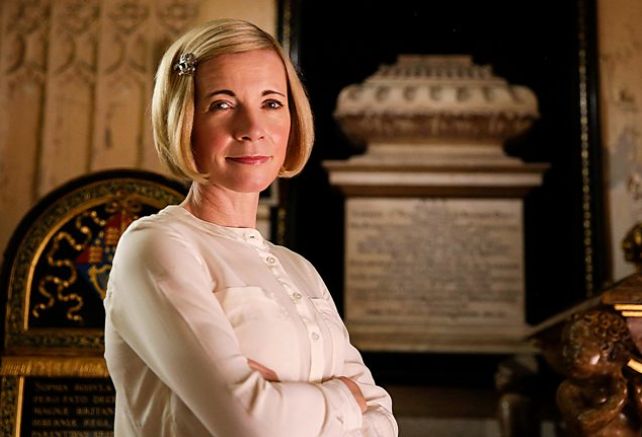
On 12 March 2026 the death of the actor Jane Lapotaire was announced. Many of her best-known roles were not in Shakespeare, but many of us will have wonderful memories of her onstage in Stratford-upon-Avon, London, Bristol and abroad.

I didn’t see her Viola in Twelfth Night at the RSC in 1974, but I do remember her playing a light-hearted, witty Rosaline in a glorious production of Love’s Labour’s Lost in 1978, the same year in which she played Edith Piaf in the remarkable play by Pam Gems at the tiny studio space The Other Place. This production dominated her career for many years, including a spell on Broadway – she won pretty well every award going for this role, quite rightly.

She returned to the RSC, in 1992 to play played Gertrude to Kenneth Branagh’s Hamlet and in the same year Mrs Alving in Ibsen’s Ghosts with Simon Russell Beale. And in 1996 she was perfectly cast as Queen Katherine in Greg Doran’s spectacular production of Henry VIII at the RSC’s Swan Theatre. Her speaking of Shakespeare was masterly and I still remember her controlled anguish when confronting Paul Jesson as Henry VIII:

Sir, I desire you do me right and justice;
And to bestow your pity on me: for
I am a most poor woman, and a stranger,
Born out of your dominions; having here
No judge indifferent, nor no more assurance
Of equal friendship and proceeding. Alas, sir,
In what have I offended you? what cause
Hath my behavior given to your displeasure,
That thus you should proceed to put me off,
And take your good grace from me? Heaven witness,
I have been to you a true and humble wife,
At all times to your will conformable;
Ever in fear to kindle your dislike,
Yea, subject to your countenance, glad or sorry
As I saw it inclined: when was the hour
I ever contradicted your desire,
Or made it not mine too?

In 2000 she suffered a brain aneurism. By a miracle she survived it and although she was never able to sustain a full part in theatre again, she was able to appear on TV, to write books, and occasionally to appear on stage. In 2018 she received the Pragnell Shakespeare Award at the Birthday Celebrations in Stratford-upon-Avon. It was presented to her by Professor Michael Dobson and her witty acceptance speech has been recorded. Here is the clip.

In it she thanked Gregory Doran, then the RSC’s Artistic Director, for giving her two roles in Shakespeare plays: The Duchess of Gloucester, who appears just once at the start of  Richard II, and the Queen of France, who appears once at the end of Henry V. 

This year she was awarded a CBE which she received from the King at Windsor Castle just months ago.

To read a fuller account of her career here are links to two obituaries.

https://www.theguardian.com/stage/2026/mar/12/jane-lapotaire-died-edith-piaf-actor-stage

https://www.pressreader.com/uk/the-guardian-e-paper-journal/20260313/281552297367009

Share
Posted in Shakespeare on Stage | Tagged , , | Leave a comment

The Destruction of the First Shakespeare Memorial Theatre

This week sees the 100th anniversary of one of the most dramatic events in Stratford, the destruction by fire of the original Shakespeare Memorial Theatre on 6 March 1926. The Shakespeare Institute Library in Stratford has an exhibition about the fire and its aftermath. The story of the fire is told in this post.

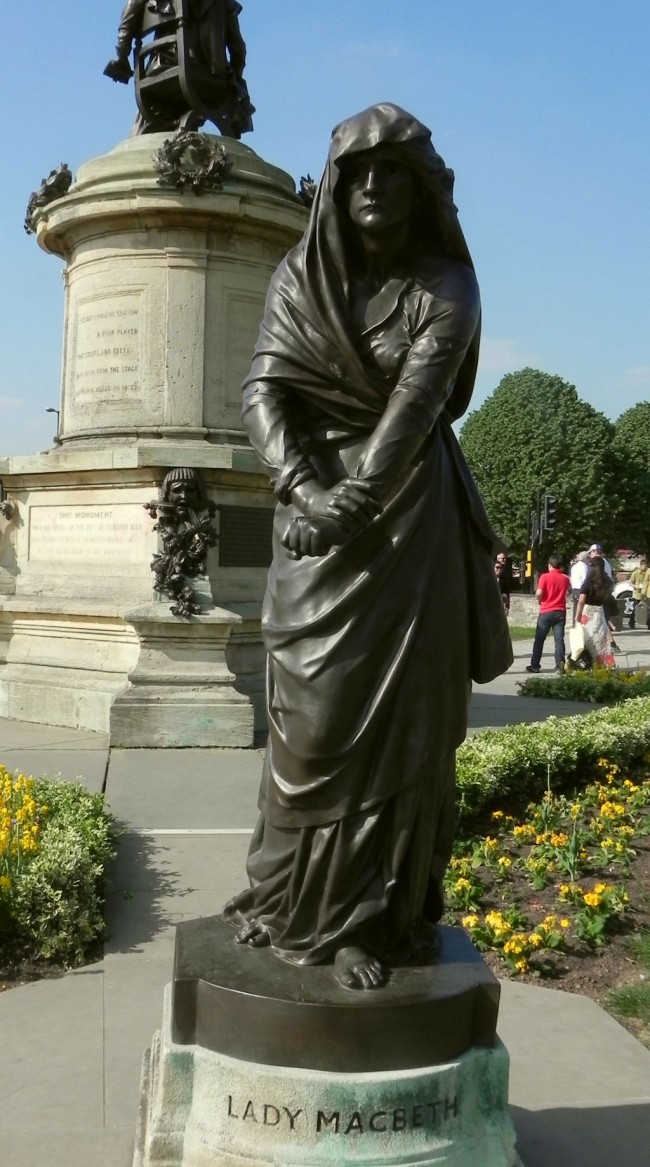
The Statue of Lady Macbeth

Most of the photographs show the devastating fire, with smoke billowing up from the theatre. My favourites though, are the rarely seen ruins of the building taken a few days later. Among the twisted metal and debris, through one of the gaps where a window once stood, can be seen the image of a woman wringing her hands in despair. It is the statue of Lady Macbeth during the sleepwalking scene. At the time of the fire the Gower Memorial, which was moved when the theatre was rebuilt, was just outside the theatre and it’s an amazing coincidence that of the four statues (Lady Macbeth (tragedy), Prince Hal (history), Falstaff (comedy) and Hamlet (philosophy) it’s the tragic figure that is just in view.

Many locals loved the old theatre, but by 1926 people were saying that it was no longer fit for purpose.  In her book The Royal Shakespeare Company: A history of ten decades,  Sally Beauman listed the theatre’s problems: “it was too small; conditions backstage were inadequate; the stage itself was tiny, and its technical equipment so old-fashioned that the least attempt at ambitious lighting effects was likely to blow every fuse in the house”. George Bernard Shaw was one of its severest critics, in 1925 saying that “The Memorial is an admirable building, adapted for every conceivable purpose – except that of a theatre”.

After the fire everyone rallied round. Huge efforts were made to ensure that the Festival went on more or less as planned, opening in the hastily-adapted town’s cinema where it remained until 1931. A huge amount of fundraising ensured that the old theatre was replaced by the 1932 Memorial Theatre, and what remained of the old building was converted into a Conference Hall. In 1986 it became the Swan Theatre, and once again this space became a real favourite with the theatregoing public.

Share
Posted in Legacy, Stratford-upon-Avon, Uncategorized | Tagged , , | Leave a comment

King Charles III, Shakespeare, and coronations

We are as sure as we can be that Shakespeare experienced the coronation of King James 1. In his pamphlet The Time Triumphant Gilbert Dugdale described the triumphal procession in London on 15 March 1604, which included the King’s Men of which Shakespeare was a leading member.

Coronations have been important for centuries in the UK, occasions when the new monarch is seen to undergo a sort of mystical transformation.

In Shakespeare’s play, Richard III unlawfully grabs the crown: characters announce the impending coronation with trepidation, and after it is over the newly-crowned king begins to show his true colours. Although it isn’t in Shakespeare’s play the coronation itself is sometimes staged in productions, as in 1984 at the RSC when at the climax of Part 1 Antony Sher knelt for the anointing, his humped back fully visible to the audience.

In Henry IV part 2, the final scene takes place just after the coronation of Henry V. Falstaff and his friends wait outside Westminster Abbey for the newly-crowned king to come by, expecting to be greeted warmly. But the coronation has symbolised the change that Henry has been warning us of:

I know thee not, old man. Fall to thy prayers….
Presume not that I am the thing I was,
For God doth know, so shall the world perceive,
That I have turn’d away my former self.

The play Henry V  shows a person changed by becoming monarch.  In his autobiography Beginning Kenneth Branagh recounts the story of his meeting with Prince Charles during the rehearsals for the play in 1984. Branagh was only 23 and not from a privileged background, and was finding it difficult to understand what it was like to be heir to the throne or king. The two had a private discussion at Kensington Palace. They talked about the need to suppress elements of one’s character, about the pressure of being in the public eye, about isolation and sadness, about the need to connect. This manifests itself in Shakespeare’s play with the night time scene before the Battle of Agincourt. They talked about faith and Charles’s “desire to strike a balance between responsibility and compassion”.

Branagh came away from the meeting with great respect for Prince Charles, and also wrote about the time when Charles and Diana came to see the production at the Royal Shakespeare Theatre in Stratford. Was it just a coincidence that when their second son was born a few months later he was christened Harry?

Prince Charles became President of the Royal Shakespeare Company in 1991. There have been many official visits to the town, but as in 1984 it’s the informal ones that people enjoyed most. Charles became a regular visitor to the theatre during the 90s. I remember on one occasion sitting in the stalls at the Swan Theatre when, after the rest of the audience were seated, there was a brief pause when Charles and his party were shown to their seats. Apart from the royal party being ushered to a private room during the interval the performance went on entirely normally.

Charles’s enthusiasm for Shakespeare, his enjoyment of performance, and his love of a joke, was most on show in 2016 when the RSC held a gala to celebrate the 400th anniversary of Shakespeare’s death. Paapa Essiedu, who was playing Hamlet at the time, began delivering the “To be or not to be” soliloquy only to be interrupted by Tim Minchin, then joined onstage by a host of theatrical royalty: Benedict Cumberbatch, Dame Harriet Walter, David Tennant, Rory Kinnear, Sir Ian McKellen and Dame Judi Dench. The argument over how to speak Shakespeare’s most famous line was eventually settled by the appearance from the stalls of Prince Charles “Might I have a word?” he said as he approached the stage, “I hope you don’t mind”, before delivering it with an emphasis on the final word “question”. It’s a delicious little clip, and I hope you’ll enjoy it as a contrast to all the formal pomp and ceremony of the coronation.

In case you would like to follow up a few more links between Shakespeare and royalty:

The Shakespeare Birthplace Trust has put together a page of links to Shakespeare’s royal connections, and to their own connections with the King.

This site lists the many occasions when King Charles has quoted Shakespeare:

And my own blogpost about Shakespeare and the monarchy features the story of the coronation spoon, the oldest item of royal regalia and one that will be used for the coronation.

Will there perhaps be a reference to the King’s favourite author during his coronation? I’m hoping so.


Share
Posted in Legacy, Shakespeare on Stage | Tagged , , , , , , , | 1 Comment

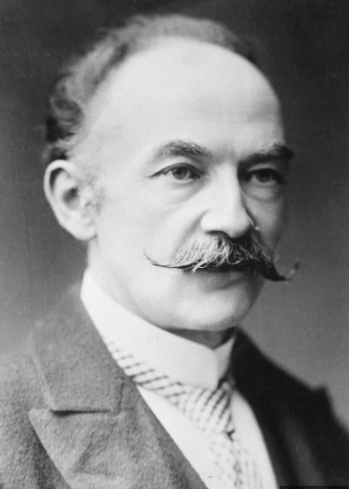
Thomas Hardy inspired by Shakespeare and Stratford-upon-Avon

Thomas Hardy

On 14 February 2023 the members of the Shakespeare Club of Stratford-upon-Avon met for a real treat of a lecture. Roger Pringle, former director of the SBT, and for many years Director of Stratford’s Poetry Festival, talked about his lockdown project, investigating the visit of Thomas Hardy and his wife Emma to Stratford-upon-Avon in the summer of 1896. The visit came at a time when Hardy was changing direction, from novelist to poet, and Roger speculated that visiting the town may have been a catalyst in this change.

One of my first blogs was about Thomas Hardy and Shakespeare, after Radio 4 had broadcast a birthday tribute on June 2 2011. I skated over the surface whereas Roger has plumbed the depths. He has scoured the seven volumes of Hardy’s published letters, examining visitors’ books from Stratford’s Shakespeare buildings, and tracing the complicated publication history of Hardy’s 1916 poem To Shakespeare After Three Hundred Years.  He told a fascinating story, noting many parallels between Hardy’s own life and Shakespeare’s, from humble rural beginnings to final years living in a large, impressive house. Recognised during his lifetime as the greatest of writers, and sometimes known as “The Shakespeare of his generation”, Hardy craved anonymity, recognising a parallel with Shakespeare’s retirement to Stratford. He attempted to control the public perception of his life by destroying his diaries, and writing his own third-person autobiography to be published under his wife’s name after his death.

Roger Pringle hopes that his research will be published: the visit of the great writer Thomas Hardy to the town certainly deserves to be more widely known. My blog can be found here though the internal links no longer work. To read Hardy’s 1916 poem, though, just click the link above.

The minutes of the meeting including a more detailed account of the lecture will appear on the Club’s website in due course.

Share
Posted in Legacy, Stratford-upon-Avon | Tagged , , | Comments Off on Thomas Hardy inspired by Shakespeare and Stratford-upon-Avon

Hilary Mantel

Hilary Mantel 2022

On Thursday 22 September 2022 the great British writer Hilary Mantel died unexpectedly. The many tributes have spoken about her gifts as a writer, about her intelligence, her humour, and about the new books that she still planned to write. There is an obituary here, and some remembrances here.

Publishing success and the renown that followed came late to her, with her trilogy on the unlikely subject of the life of Thomas Cromwell set in the reign of Henry VIII. She enjoyed her fame:  I heard her speak at the Budleigh Salterton Literary Festival (of which she remained Patron until her death) after the first two books had been adapted for the stage by the Royal Shakespeare Company and for BBC TV, and it was clear that she loved the process of collaboration with other creative people. She took part in a number of events at the RSC and was invited to become a Governor of the Company, another honour she undoubtedly enjoyed.

She endeared herself to historians, writers of fiction and craftspeople by her meticulous research.  Quite by chance a friend shared this blog a couple of days ago explaining how a calligrapher created a few stunningly beautiful pages in the style of a medieval book of hours, a prop used in the TV series of Wolf Hall and Bring up the Bodies.  She must have enjoyed this attention to historical accuracy.

Hilary Mantel

I’ve revisited some of the posts  I wrote about her and her devotion to the craft of writing:

This one was written during her presentation of the Reith lectures, on the subject of writing historical fiction as opposed to historical fact.

Here she writes about the art of poetry as exemplified by Thomas Wyatt,  On the Wolf Hall trilogy and their connection with Shakespeare, and On the stage adaptation of her novels.

As one of those remembering wrote, she was the Queen of Literature. She has a unique voice, and we shall not look upon her like again.

Share
Posted in Legacy, Shakespeare's World | Tagged , , , | Comments Off on Hilary Mantel

“The long day’s task is done, and we must sleep”

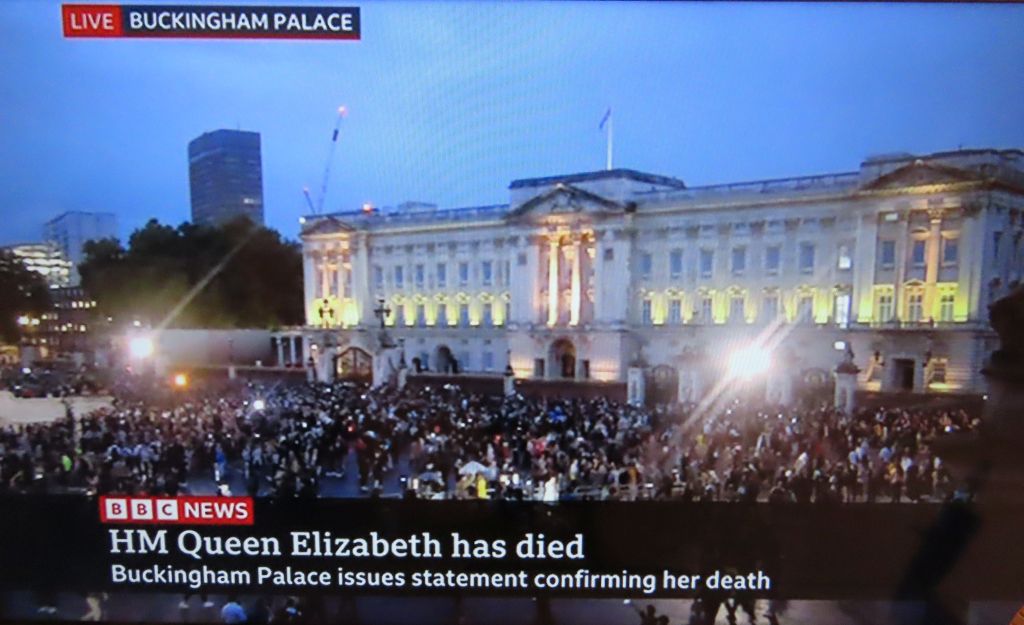
Buckingham Palace on the evening Queen Elizabeth 11 died.

With the death of Queen Elizabeth II today, 8 September 2022, we’re now going to live through something that few British people alive can remember as a new monarch succeeds to the throne. Tributes are flooding in, crowds carrying flowers gather at Buckingham Palace, at her favourite and most historic home Windsor Castle and at Balmoral Castle where she died.  And the second Elizabethan era has come to an end.

Like her namesake and another long-lived monarch, Elizabeth 1, the Queen died peacefully. Lawyer John Manningham wrote “This morning, about three o’clock, her Majesty departed from this life, mildly like a lamb, easily like a ripe apple from the tree”. When she died in 1603 Elizabeth 1 had reigned for 45 years, which must have seemed an unimaginably long time.

Commentators on TV are saying it is a moment of change and transition that will take some time for the nation to adjust to. And so it must have been in 1603. Shakespeare lived through that change, and  must have felt it keenly, both professionally and personally. In his earlier plays he wrote repeatedly about the life and death of kings, and the turbulent times in which they lived. Some of his most memorable speeches relate to what it means to be a monarch, and although Richard II’s reign and death were very different from Elizabeth II’s, this wonderful speech has been going through my mind this evening, a reminder of the transience of power and the impermanence of life:

                 of comfort no man speak:
Let’s talk of graves, of worms, and epitaphs;
Make dust our paper and with rainy eyes
Write sorrow on the bosom of the earth,
Let’s choose executors and talk of wills:
And yet not so, for what can we bequeath
Save our deposed bodies to the ground?
Our lands, our lives and all are Bolingbroke’s,
And nothing can we call our own but death
And that small model of the barren earth
Which serves as paste and cover to our bones.
For God’s sake, let us sit upon the ground
And tell sad stories of the death of kings;
How some have been deposed; some slain in war,
Some haunted by the ghosts they have deposed;
Some poison’d by their wives: some sleeping kill’d;
All murder’d: for within the hollow crown
That rounds the mortal temples of a king
Keeps Death his court and there the antic sits,
Scoffing his state and grinning at his pomp,
Allowing him a breath, a little scene,
To monarchize, be fear’d and kill with looks,
Infusing him with self and vain conceit,
As if this flesh which walls about our life,
Were brass impregnable.


Share
Posted in Legacy | Tagged , , , , , | Comments Off on “The long day’s task is done, and we must sleep”

First Folios for sale


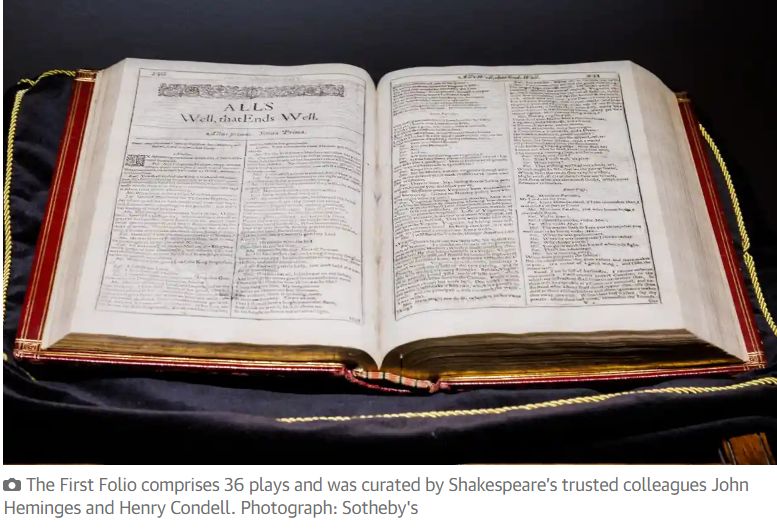
The First Folio being sold in 2022

On 7 July 2022 a copy of Shakespeare’s First Folio will be sold in New York. It’s estimated that it will sell for “only” $2.5 million. The record-holder is the copy sold, again in New York, in October 2020 which went for $8.4 million (£6.4 million). This was complete, and in exceptional condition. It was bought by a private collector. The one being sold now is not complete, lacking the portrait of Shakespeare, and shows signs of being read over a long period. The book has spent most of its life in Scotland. The Gordon family acquired the copy soon after its publication in 1623 then it passed through several other hands before being sold to a bibliophile in Chicago in the 1960s.

Fine Books Magazine’s informative article includes information about the volume:

there are 17th-century manuscript annotations, doodles, ink spills and markings across over 30 pages in at least five different hands, mostly from the Gordon family… Three members wrote their names: John Gordon (at least five times), Joan Gordon (twice) and Alex Gordon (once), a common practice throughout history. There are fragments of prayers, verse and even mysterious lines from a a “John Frasere”, a speech asking for Herculean strength “to beat him That let my love be stolen away when I was sliping”.

Modern readers might be surprised to find that these manuscript additions in such a valuable book only rarely relate directly to Shakespeare’s work.

Public collections are unlikely to have sufficient funds to purchase First Folios so it is likely that this one will remain in private hands. Around a third of existing copies are in the Folger Shakespeare Library in Washington, DC, purchased by wealthy oil-man Henry Clay Folger before the foundation of the Library. In recent years the Folger Shakespeare Library has made its collections of Folios available to more people by sending copies out on tour around the USA.

Andy Jaggard with the projected image of his father Gerald in the Shakespeare Press

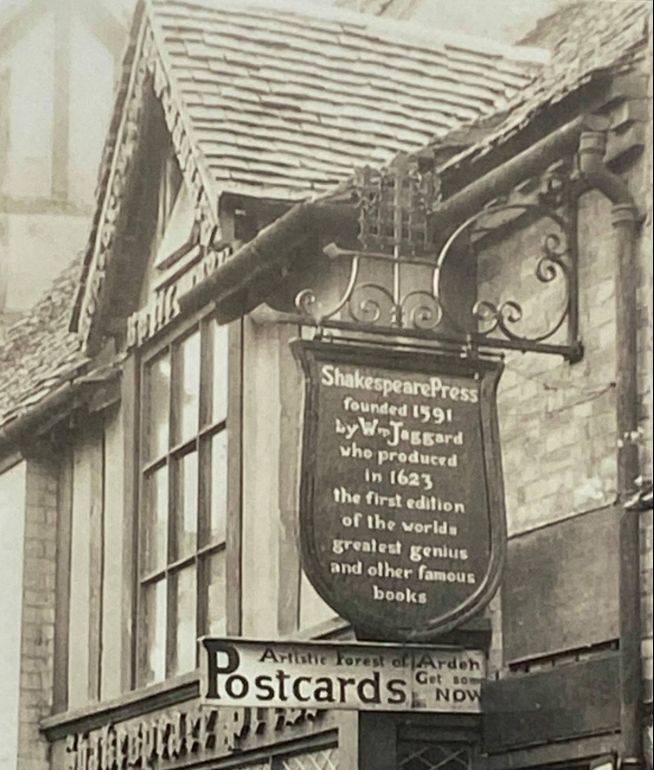
Folger was obsessed with collecting Shakespeare-related material including Folios, and from the 1890s spent over thirty years chasing them down. Book dealers knowing of his interest must have been thrilled to acquire a First Folio. The Shakespeare Club of Stratford-upon-Avon’s May meeting was a dramatized presentation on the subject of Captain William Jaggard who opened a bookshop, The Shakespeare Press, in Stratford, and his son Gerald who continue to run it after William’s death. I’ve written before about Jaggard. The organisers of the event were Jaggard’s grandchildren Andy Jaggard and Anthea Carter who are now working on a book that will tell the story of their “remarkable, difficult and eccentric” ancestor and his shop. Jaggard became well known to professional Shakespeareans including Sidney Lee though he fell out with locals. One of the many stories they told was about Jaggard’s attempt to sell Henry Clay Folger a copy of the First Folio. Andy and Anthea had no proof of the truth of this story that they had been told until recently when the Folger Shakespeare Library uncovered a series of letters between Henry Clay Folger and William Jaggard shedding light on the negotiations which, sadly for Jaggard, came to nothing.

The Shakespeare Press, Sheep Street, Stratford-upon-Avon

The Shakespeare Press, managed by William, then by his son Gerald, was a notable element of the Stratford-upon-Avon scene from 1910 to 1964. The building in Sheep Street remained empty for several years before being completely restored, and it is now the Vintner Restaurant.

I’ve written posts about various aspects of the First Folio before:

This about copies of all four Folios found in a Warwickshire house

This about the issue of selling Folios in general

This about the catalogues that have been created of all the copies of the First Folios

This one about the importance of Libraries holding copies of the Folio

Finally, In this video you can see the copy of the Folio being sold in July 2022.


Share
Posted in Legacy, Stratford-upon-Avon | Tagged , , , , , , , , , , | Comments Off on First Folios for sale

A sad farewell to Peter Brook

Peter Brook

The death at the age of 97 of the great theatre director Peter Brook has been announced today, 3 July 2022. He burst on the theatre scene at the age of 20 in 1946, coming from the Birmingham Repertory Theatre to direct Shakespeare at Stratford-upon-Avon. His production of A Midsummer Night’s Dream for the Royal Shakespeare Company in 1970 changed Shakespeare onstage for ever.

There’ll be no shortage of tributes to him  but here are a few links from The Shakespeare blog looking at different aspects of his work. Lots of links are included to talks, videos and websites and I haven’t had a chance to check if they still work so apologies if you find a link leads nowhere.

This one reports on a symposium I attended in 2015 at the Victoria and Albert Museum, attended by Brook himself.

Here is an examination of his 1955 production of Titus Andronicus starring Laurence Olivier and Vivien Leigh, that proved that this bloodthirsty play was not unstageable, and was in fact worthy of its place in the repertoire.

The actor Alan Howard played Theseus and Oberon in Brook’s A Midsummer Night’s Dream.

This post looks at a collection of essays he wrote in 2013 at the age of 88.

In it he showed he never lost his admiration for the work of Shakespeare: “The uniqueness of Shakespeare is that while each production is obliged to find its own shapes and forms, the written words do not belong to the past. They are sources that can create and inhabit ever new forms… There is no limit to what we can find in Shakespeare”.

Share
Posted in Legacy, Shakespeare on Stage | Tagged , | 1 Comment

A statue for Aphra Behn in Canterbury

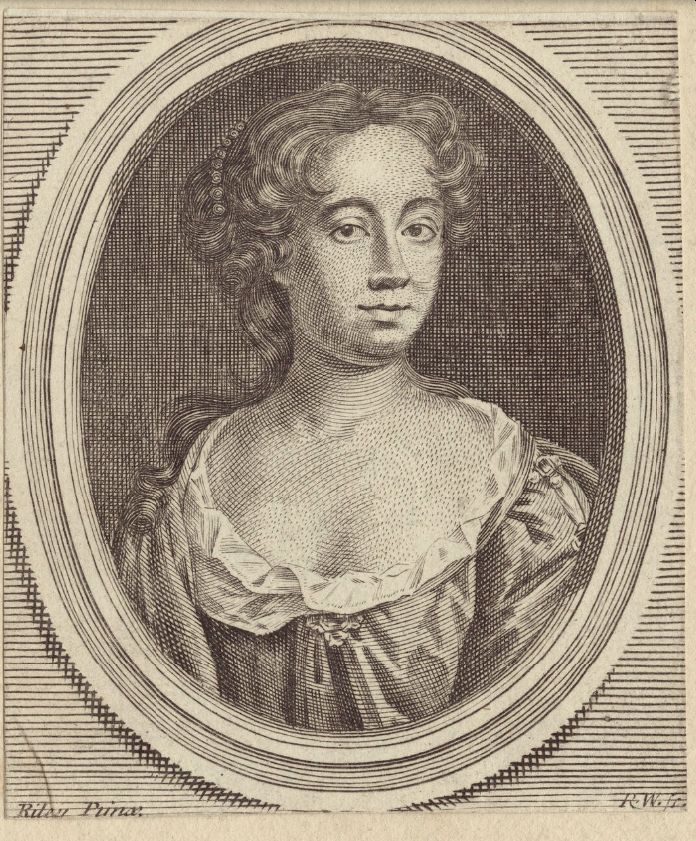
Aphra Behn. Engraving based on Peter Lely’s portrait

The city of Canterbury has many literary connections. It’s the end-point for Chaucer’s pilgrims in The Canterbury Tales, the setting for the murder of Thomas a Becket as dramatized by TS Eliot in Murder in the Cathedral, and the birthplace of Shakespeare’s contemporary writer, Christopher Marlowe.  Aphra Behn’s connection is much less well-known, but see this post for information about her. Born in Canterbury, she was the first professional writer in the English language, and it’s great news that she is to be commemorated with a full-size statue.

There are already statues highlighting the city’s literary heritage. In 2016 a statue of Geoffrey Chaucer was unveiled. It shows Chaucer, tired at the end of his pilgrimage, on a circular plinth depicting some of his pilgrims. Christopher Marlowe’s statue was dedicated in the late nineteenth century and currently stands near the Marlowe Theatre in Canterbury. At the time the portrait now generally  accepted as Marlowe had not been identified, so the statue depicts not him but a female figure, the Muse of Poetry. This semi-naked figure is familiarly known as Kitty and characters from his plays are beneath.

Fortunately Aphra Behn’s appearance is known. She was painted by court painter Sir Peter Lely in the 1670s when she was a famous writer, and many engravings were published based on the painting. She died at the relatively young age of 49, in 1689, and such was her renown that she was buried in Westminster Abbey. After that time, though, she was largely forgotten and it’s only relatively recently that her plays have been widely performed  and studied and her reputation as a trailblazer for women re-established. It was only a few years before she started writing, in the 1660s and 1670s, that women were allowed to act on public stages, and women would have enjoyed playing the vibrant roles that she wrote for them. In The Rover, her most famous play, the clever, inventive women run rings around the men.

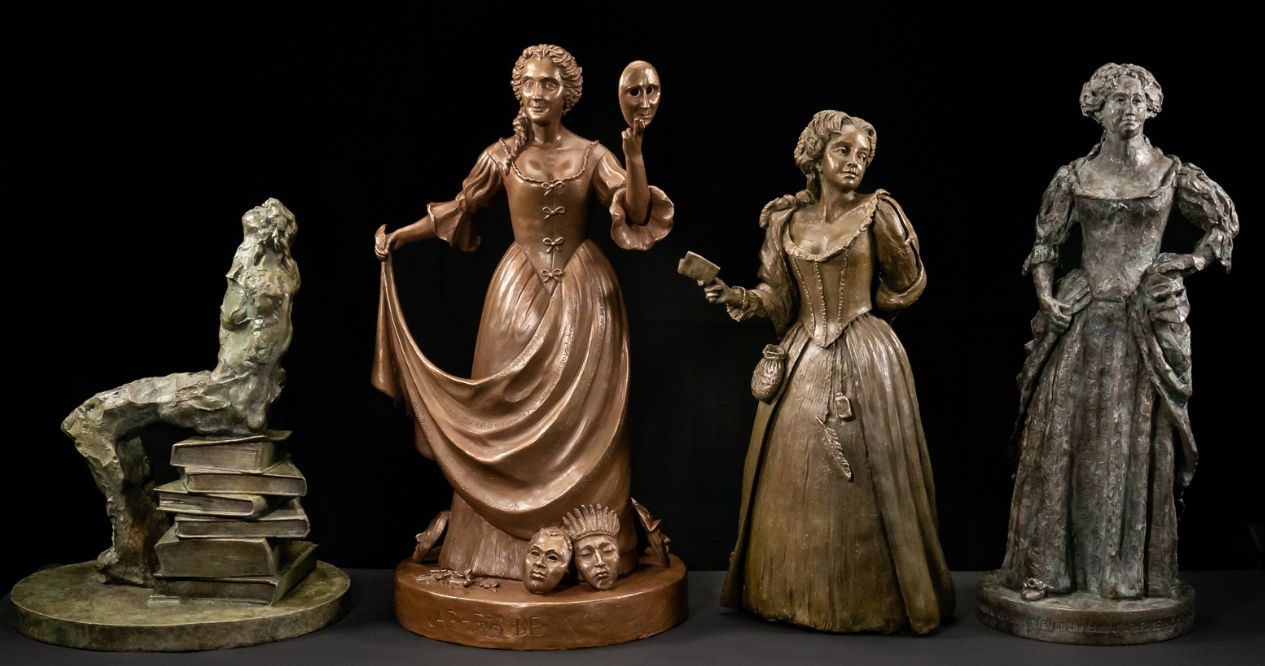
The Canterbury Commemoration Society is responsible for organising the new statue of Aphra. They have held a competition to design it and have whittled the entries down to a shortlist of four. The maquettes have been on a little tour and on 27 and 28 June they were on display in the Royal Shakespeare Theatre in Stratford. It was a great opportunity to see them and vote on a favourite, but of course all the information, including videos of each maquette and the artist’s comments on their work, are available online. If you have read or seen any of Aphra Behn’s work, and loved it, do vote for the statue you would like to see represent her in the city of her birth.

The maquettes of Aphra Behn

A fundraising dinner is also being held in Canterbury on 16 July 2022. Speakers will include actor Alexandra Gilbreath who starred in the RSC’s most recent production of The Rover, academic and poet Charlotte Cornell, and theatre director Matthew Townshend. In a special auction, the maquettes themselves will be sold off. But most importantly, get voting!

Share
Posted in Shakespeare's World | Tagged , , , , , , , | Comments Off on A statue for Aphra Behn in Canterbury

The Princes in the Tower: new evidence

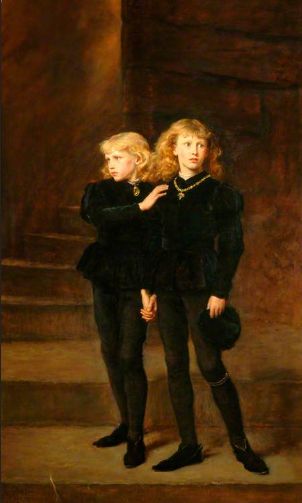
John Everett Millais, The Princes in the Tower

Shakespeare’s play Richard III has always been one of his most popular dramas. And no wonder: it features a compelling protagonists in a great story. Many people accept Shakespeare’s version of the history of the end of the Plantagenet and the beginning of the Tudor period without question, and historians who have spent years trying to unpick the truth regarding this period are not surprisingly annoyed by Shakespeare’s casual approach.

I wrote a few years ago about the discovery of Richard III’s skeleton and its burial in Leicester Cathedral. The work devoted to this subject at last enabled Richard’s life to be examined in a more balanced way.

Now a new documentary reopens the question of Richard III’s villainous reputation. The series Lucy Worsley Investigates takes the most scandalous story of the time, the disappearance of the Princes in the Tower. The programme is available on I-Player.

Lucy Worsley Investigates

It was an event of national significance. The 12 year old son of the late king Edward IV and his young brother disappeared during the summer of 1483 after being put in the Tower of London allegedly for their protection. Their uncle Richard had been appointed Protector and when their legitimacy was called in question Richard took the throne for himself. Shortly afterwards they disappeared.

There are many gaps in the historical record: reliable witnesses and evidence are in short supply when it comes to this story, one of the reasons why there is still so much disagreement.

One contemporary report that has survived was written by Dominic Mancini. Mancini happened to be in London for the first half of 1483. On his return to France just before the coronation he wrote a report for his Patron the Archbishop of Vienne. Mancini had no particular axe to grind and praised Richard’s military record and his popularity as a leader in the north of England. But he repeats the rumours he had heard while in London that Richard had murdered the princes. The document is not a new discovery as it was found in Lille in 1934, then published in an English version in 1936, but it shows that there may still be other documents waiting to be uncovered. David Crowther’s The History of England podcast and blog contains lots of quotes and information.

Thomas More’s account established Richard III as a villain,  and was printed in sources known to have been used by Shakespeare. Another document under discussion has been discovered by Professor Tim Thornton. It offers a solution to the mystery of where Thomas More got his account of the murder. Shakespeare too picked up some of the details in a speech by James Tyrrel:

The tyrannous and bloody act is done;
The most arch deed of piteous massacre
That ever yet this land was guilty of.
Dighton and Forrest, who I did suborn
To do this piece of ruthless butchery –
Albeit they were flesh’d villains, bloody dogs –
Melted with tenderness and mild compassion,
Wept like two children, in their deaths’ sad story

One of the pieces of evidence considered in Lucy Worsley Investigates

21st century science has sometimes cast doubt on the findings of earlier researchers. In the 17th century bones thought to be those of the princes were discovered, accepted as genuine, and buried in Westminster Abbey. The urn was opened in the 1950s and results published in an academic paper, but the findings are now in doubt. Professor Turi King, one of the scientists who worked on the identification of Richard III’s skeleton, agreed that the research was flawed. But even with DNA profiling and carbon dating she concluded there was no legitimate reason to reopen the urn and ethical concerns prevent further research being undertaken. There’s a parallel here with Shakespeare’s tomb. Every so often someone suggests opening it, but it’s good to know that curiosity alone would not justify this action.

Worsley is Joint Chief Curator at Historic Royal Palaces, and her visits to libraries, museums, archives and historic buildings make this a delightful series. Her interviews with the enthusiastic researchers and painstaking specialists show how incremental gains in knowledge can built up a case. And it’s good to see so much cross-disciplinary work going on.

Her conclusion is that Richard was indeed guilty. Detectives always look for a person with the motive and opportunity, and he had both. And In the violent dog eat dog world of the late 15th century there was little space for moral scruples.

If you want to catch the play live, Shakespeare’s Richard III is about to be produced by the Royal Shakespeare Company and in a first for the Company the actor playing Richard is himself disabled.

Share
Posted in Plays and Poems, Shakespeare's World, Sources | Tagged , , , , , , , , , , | Comments Off on The Princes in the Tower: new evidence